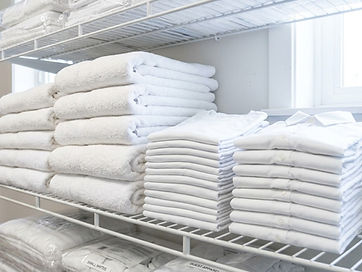
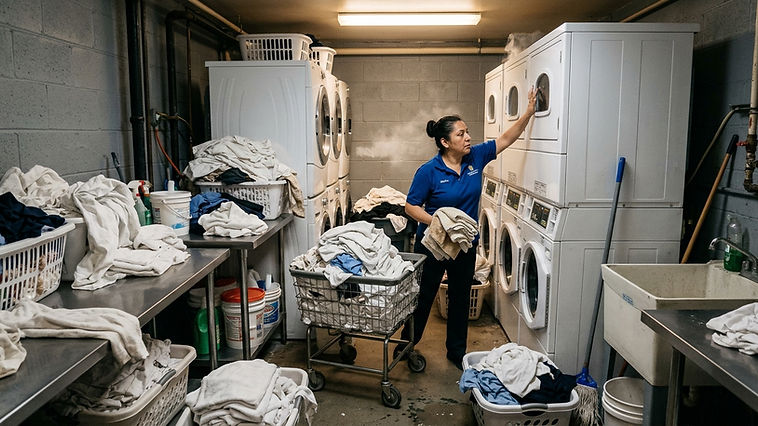
When a hotel, gym, spa, or vacation rental first considers doing its own laundry, the math usually looks simple: we already have a couple of machines, so why pay someone else? That math almost always leaves out the costs that do not show up on a single invoice. The equipment depreciates, the equipment requires costly maintenance, the utilities climb, the labor adds up and fluctuates, and the linens wear out faster than anticipated. This is a closer look at what in-house laundry actually costs a business, and why outsourcing tends to win the comparison once every line item is on the table.
The equipment you are really paying for
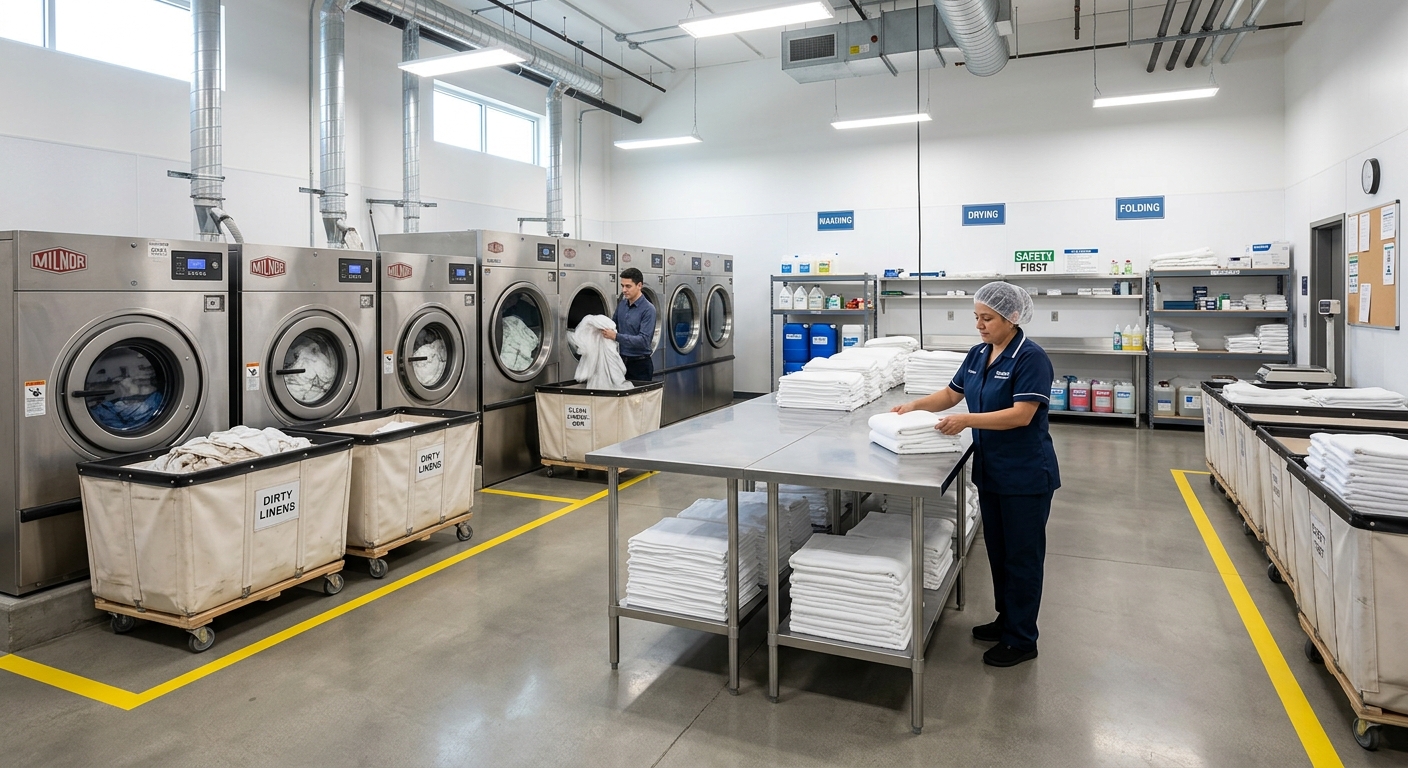
A residential washer and dryer is not built for business volume. A hotel turning over twenty rooms a day, or a gym processing a few hundred towels, will burn through a consumer machine in a year or two. Although residential machines are reasonably priced, they require 3x more laundering cycles, increasing your payroll expense significantly. Commercial-grade equipment is the realistic baseline: a single 60-lbs capacity commercial washer runs roughly $15,000 to $20,000+, and a matching dryer adds another $6,000 to $10,000+. A small operation needs at least one of each plus a folding table and carts, so the entry cost sits around $25,000 to $35,000 before the first load is ever run. This calculation does not take into consideration other significant expenses: building modification to ensure there is enough space for employees to work safely, plumbing modifications, drainage, electrical, vents, and building code ordinance.
Utilities are the quiet drain
Laundry is one of the most utility-intensive operations in any building. A standard 60-lbs capacity commercial washer can use up to 120 gallons of water per cycle, and a fully electical dryer can draw up to 35 kilowatt-hours per load. Although a gas-heated model draws up to 1.5 killowatt-hours per load, it consumes up to 110,000 BTUs (1.2 gallons of propane) per cycle. For a property running 20 loads a day, that is roughly 2,400 gallons of water and 700 kWh of electricity or 2,200,000 BTUs of gas every single day. At Coachella Valley utility rates, the water, sewer, gas, and electric tied to laundry alone can run up to six figures a month for a mid-sized property. Most owners never isolate that line item, so the cost hides inside a general utilities bill.


The labor you are not counting
Someone has to sort, load, transfer, fold, and stack. Even at a modest $18 an hour, a single employee spending four hours a day on laundry costs about $1,500 a month, and that is before payroll taxes and benefits. In practice, laundry duty is patched together across housekeepers, maintenance staff, and managers, which makes the true labor cost almost invisible. Add it up honestly and a small hospitality property is often spending $1,500 to $3,000 a month in labor just to keep linens flowing, on top of equipment and utilities.
Linen turnover and replacement
In-house laundering is harder on linens than a controlled commercial process. Overloading, inconsistent detergent dosing, and high-heat home dryers shorten fabric life, which means towels and sheets are replaced more often. A typical hospitality property replaces 15 to 25 percent of its linen inventory every year. For a 30-room property with a 3-par inventory of linen and towel has an average value of $9,000. That is $1,350 to $2,250 in annual replacement cost that is rarely attributed to the laundry operation itself.
- Equipment standard 10-year depreciation: roughly $125 to $167 per month.
- Utilities: average $3,500 per month for a mid-sized property running 40 loads a day.
- Labor: $1,500 to $3,000 per month once every hour spent on laundry is counted.
- Linen replacement: 15 to 25 percent of inventory value per year, often $1,350 to $2,250.
- Detergent and supplies: $500 to $1,000 per month depending on volume.
- Downtime risk: a single broken machine can stall turnovers during a sold-out weekend.
What outsourcing actually costs
Commercial laundry services in the region typically price by the pound, with hospitality wash-and-fold rates landing around $1.15 to $2.25 per pound depending on volume and finishing requirements. A 30-room property generating roughly 600 pounds of laundry a week spends about $690 to $1,350 a week, or $2,990 to $5,850 a month, and that number includes pickup, delivery, detergent, equipment, labor, and a guaranteed finish standard. Against an average of $6,760 fully loaded in-house cost, outsourcing is frequently a break-even or a savings before you account for the freed-up staff hours and the removed equipment risk.

The benefits beyond the spreadsheet
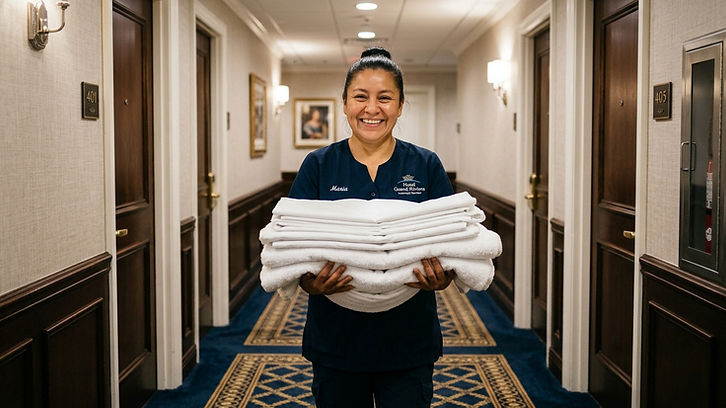
The cost comparison is only half the argument. Outsourcing also returns the laundry room square footage to revenue-generating use, removes the capital risk of a failed machine during peak season, and gives a property a consistent linen standard that protects its reviews. Staff who were folding towels can focus on guest experience, and the property gains a commercial laundry partner that scales with occupancy instead of needing another machine every time demand spikes.
When in-house actually makes sense
There is a narrow band where in-house laundry wins: very low daily volume, an existing utility hookup with spare capacity, and staff who are already on the clock with nothing else to do. Below roughly 150 pounds of laundry a week, the fixed cost of outsourcing can outweigh the savings. Above that threshold, the math flips quickly, and most hospitality and fitness properties in the valley are well past it, which is why so many of them move to outsourced commercial laundry.
References & further reading
Let us handle this week's laundry
Once you add equipment, utilities, labor, linen replacement, and risk, in-house laundry usually costs more than the per-pound price of a commercial partner, and it comes with none of the consistency guarantees. If you want to see the real numbers for your property, request a commercial quote and we will build a side-by-side comparison against your current operation.
Schedule a Pickup